






About
Visiting Castle Combe Responsibly
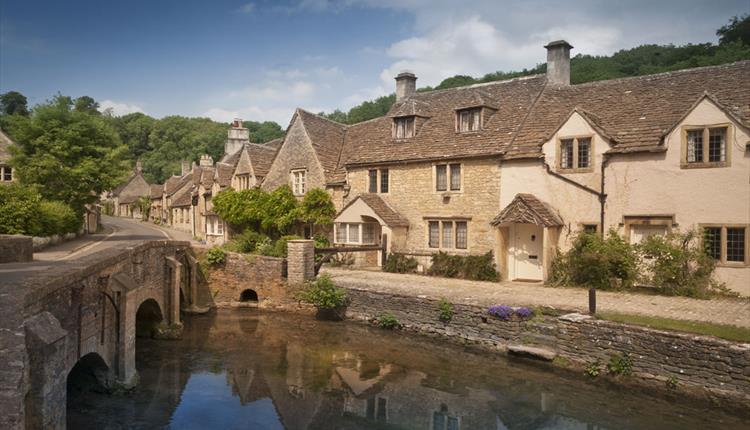
At the very southern end of the Cotswold Way, and some distance from the more centrally located popular locations such as Bibury, Bourton-on-the-Water, Stow-on-the-Wold, Broadway, Chipping Campden etc, Castle Combe (in common with several others!) is often described as 'the prettiest village in England'.
With its honey coloured stone cottages nestling in a wooded valley, it has changed very little over the centuries..
We’re proud to share this special place with visitors from around the world. But as Castle Combe grows in popularity, we invite you to help us protect its unique character and beauty by visiting responsibly.
Why Responsible Travel Matters Here
Castle Combe is a tiny living village, not a film set (though you might recognize it from Stardust, War Horse, and others). Only around 50 people live in the village centre. The narrow lanes and peaceful nature of the village are part of its charm - and also what makes it vulnerable to the pressures of over-tourism.
By travelling with care and visiting responsibly, you will have a better experience and will help us preserve the character of Castle Combe for future generations of both residents and visitors.
How to Visit Castle Combe Responsibly
Visit at Off-Peak Times
The village is very small, and the average length of stay is just over one hour. There are no rows of gift or souvenir shops in the tiny main street!
It is not an all-day destination unless used as an overnight base to visit other local attractions.
During the summer months the village can become inundated with visitors, which spoils their own enjoyment and is a constant problem for residents. Plan your visit on weekdays or during shoulder seasons (spring or autumn). You should certainly seek to avoid Bank Holidays, when the car park is very likely to be full, with no alternatives. Very frustrating after a long journey!
Our favourite time to visit is in the Winter, and visiting in the early morning or late afternoon when the village is quieter, allows you to enjoy the village’s serenity - and avoid the midday crowds.
If you are bringing a small or large group trip avoid peak times if possible, and please make sure you park in the village car park.
Coaches are not permitted to visit the village centre and have their own designated spaces within the car park.
Rethink the Car
Parking is very limited and often fills quickly. If you can, use public transport, bike, or carpool. The nearby town of Chippenham has buses to the village. Walking or cycling into Castle Combe also offers stunning views along the way.
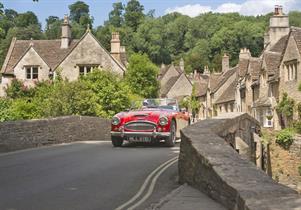
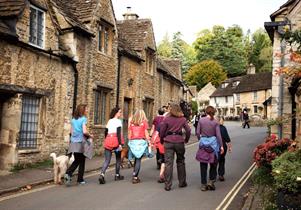
Please take care when walking from the car park and through the village centre. Castle Combe is a unique and beautiful setting, but pedestrians, cyclists, horses, delivery vehicles and cars need to share the limited narrow access, often without pavements (pedestrian walkways). It is especially important to keep children and dogs under control.
If you do have to travel by car, please make sure you park in the village car park and avoid trying to drive down the narrow lanes into the village. It is virtually impossible to park in the lower village.
Explore Beyond the Main Street
While the centre of Castle Combe is picture-perfect, the surrounding countryside, nearby villages such as Lacock and Biddestone and lesser-known footpaths are just as magical. Enjoy a circular walk, discover hidden streams, and see how the landscape changes with the seasons.
Please note that there is restoration work for the flora and fauna underway at places around the village. This is being enabled by some new fencing, guiding and maintenance of footpaths and the introduction of sheep to control bramble build up etc. Please keep to signed footpaths and keep dogs on a lead as directed.
Take Only Photos, Leave Only Footprints
Be mindful when capturing photos—respect the privacy of residents, and avoid blocking paths or roads. Please don’t enter private gardens or lean on windowsills. Castle Combe is beautiful, even without the perfect Instagram angle.
Please be prepared to take your litter home with you; whilst there are bins and they are emptied daily when busy, they can still become overloaded. Please do not force the litter in, leave it beside or on top of bins nor use the grit bins on the hill as litter bins.
Please note there are public toilets just to the south of the town bridge, and please clear up after your dogs. We want to keep the country footpaths and woods beautiful for all visitors.
Support Local Businesses
If you are visiting please make sure you support local tourism businesses - enjoy a cream tea, visit the Manor House Hotel, Castle pub or White Hart for lunch, dinner or an overnight stay. By choosing local, you directly support the businesses and people who help keep this village thriving.
Staying Overnight?
One of the best ways to experience Castle Combe is to stay overnight. The village becomes beautifully quiet in the evenings, and you’ll have a chance to enjoy its charm without the daytime rush. The Manor House offers an unforgettable stay in a 14th-century building surrounded by parkland, fine dining, and historic elegance. Just across the way, The Castle Inn provides a cosy, welcoming experience with rustic character, local ales, and hearty food by the fire. There are a number of local B&Bs.
Join Us in Protecting Castle Combe
Castle Combe is more than a destination – it is a delicate balance of heritage, community, and nature. By travelling gently, you become part of its story, helping to keep it authentic, peaceful, and welcoming.


.png)
.png)






 to add an item to your Itinerary basket.